 I'm embarrassed to say, it happened to me again this week, and I froze. A project I was the primary developer on about 5 years ago was being praised by my counterpart in another part of my organization for its innovativeness and usefulness. The only problem is that this counterpart was praising someone else for the work - a male engineer. I didn't correct the error. Now, the person being praised indeed deserves a share of the credit - he contributed to the project in very important ways - but it was neither his idea nor primarily his product. Later, I was promoted, and I'm now that male engineer's supervisor, so on one level I was quite happy to allow the praise to be assigned to my employee, but on another level, I regret that I allowed a male to gain credit for work done by a female.
Friday, May 23, 2014
Attribution - Are the Wrong People Getting Credit?
I'm embarrassed to say, it happened to me again this week, and I froze. A project I was the primary developer on about 5 years ago was being praised by my counterpart in another part of my organization for its innovativeness and usefulness. The only problem is that this counterpart was praising someone else for the work - a male engineer. I didn't correct the error. Now, the person being praised indeed deserves a share of the credit - he contributed to the project in very important ways - but it was neither his idea nor primarily his product. Later, I was promoted, and I'm now that male engineer's supervisor, so on one level I was quite happy to allow the praise to be assigned to my employee, but on another level, I regret that I allowed a male to gain credit for work done by a female.
Monday, April 21, 2014
Links - 4/21/2014
 Think that D in high school math means you can't go into STEM? Think again. A Salon article on getting girls to choose, and stick with, STEM careers tries to break down the confidence barrier by highlighting that the MIT alum who now develops the curriculum for Girls Who Code did not do so well in high school math.
 On a similar note, challenging yourself is worthwhile, even if your grades aren't perfect. Google would rather you be a B student in CS than an A+ student in English (NYTimes)
Provide equality of opportunity first before looking for answers in our genes. Neil deGrasse Tyson answers whether it's possible that there is a genetic reason women (or others) are not as likely to pursue STEM fields. The video is several years old, but for some reason it has been making the rounds recently. NPR has a good summary for those who can't or don't want to watch the video.
Ban potentially dangerous science fair projects? Science teacher reportedly suspended for allowing "imitation weapon" science projects. I seem to recall things a bit more dangerous than that going on when I was in high school.
Skepticism is part of science, but skepticism about science is not a good thing. Maybe that article from last week's links about avoiding the term "theory" was onto something.
Have more links to share? Put them in the comments or send them to me directly.
Tuesday, April 15, 2014
Don't Mess Up (Or Keep Trying Until You Succeed)
There are many awesome things about being a woman in a field dominated by men, but one of the less awesome things is the fear of having your failures held against not just yourself but all women. Piled Higher and Deeper has a great take on this from the perspective of the woman and xkcd takes it on from the perspective of (some) men:

So obviously, the solution if you are a woman is never to make a mistake. But let's be honest, you will. Making mistakes is an important part of learning. When you make that inevitable mistake or two or ten, it's tempting to give up and walk away. Don't do it. If you do, you don't have the opportunity to show everyone that you can get it right. They'll only be able to remember you for the failure and not the triumph.
So obviously, the solution if you are a woman is never to make a mistake. But let's be honest, you will. Making mistakes is an important part of learning. When you make that inevitable mistake or two or ten, it's tempting to give up and walk away. Don't do it. If you do, you don't have the opportunity to show everyone that you can get it right. They'll only be able to remember you for the failure and not the triumph.
Monday, April 14, 2014
Links - 4/14/2014
 To tide everyone over while I work on my next few posts, here are some science-related links I found interesting last week.
It is because it has been. Why are there so few women in tech? This parable has the answer.
Be the egg. Ever wanted to go through a Rube Goldberg machine? According to this new GoldieBlox video, that's what happens if you study STEM. Although followers know that I prefer inclusive marketing of tech toys over toys aimed exclusively at girls, this is pretty good.
"People didn't invent this stuff because they were bored." This is quite harsh (and uses some R-rated language), but it makes the point that being bad at math is not a badge of honor.
Oh, YouTube comments. Brain Scoop's Emily Graslie tackles sexism related to her YouTube channel.
Have some good STEM-related links? Post them in the comment section or send me a message.
Wednesday, April 2, 2014
The Intern Hiring Conundrum
 When I say "STEM is for Everyone," I mean it. STEM is not just for people who do STEM - problems that come up in our daily lives can be solved with the techniques we learn by studying STEM. When you hear "economics," don't think "price of wheat in a drought," think "hiring interns."
Here's why. A friend came to me with a problem her organization is having hiring interns. There are 7 divisions in her organization, and it used to be that each division handled intern hiring independently. Too often multiple divisions would end up giving offers to the same candidates, which confused the candidates and made it harder for the divisions to predict yield (that is, the percentage of candidates that will accept offers).
So a couple of years ago they switched to a coordinated hiring process, where each of the divisions would select their preferred candidates and representatives from each of the 7 divisions would sit in a room to resolve any conflicts. But these meetings could get very heated and led to inter-divisional conflicts. So they want to take emotions out of the process and develop a fair system allocate candidates between the divisions.
Economists will recognize this as a matching problem. Matching is a very complex problem - indeed, a matching algorithm was one of the accomplishments that led to the 2012 Nobel Prize in Economic Science for Lloyd Shapley and Alvin Roth. For various reasons, the organization is not going to use candidate preferences in making division assignments, which helps simplify the system to a more traditional resource allocation problem. Drafts, lotteries, and auctions are all mechanisms for allocating scarce resources. Picking the right system will help you get the right interns to the right groups. To figure out which is the right system, you need to understand your objectives and constraints, and how each system handles your situation. After the jump, I go through some of the possible intern assignment systems and their pros and cons.
I should point out that I have not studied either economics or game theory extensively - I find these issues fascinating, but true experts would have a lot more to say about this.
Wednesday, March 26, 2014
Tech or Something Else? Why Not Both?
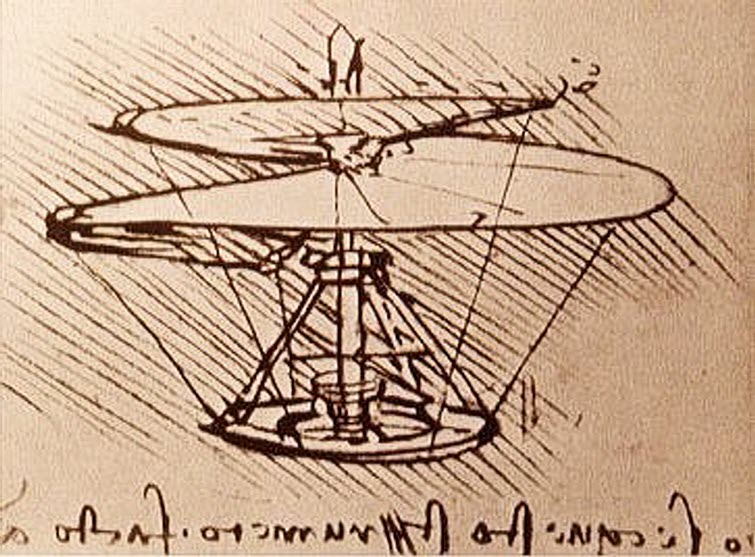 Talking to high school students, one of the most common things I hear is in the form "I really like [STEM field] but I have a passion for [arts/humanities field]." As in, "I really love science, but I'm really into music" or "I love math, but I really want to study French." College catalogs and job descriptions conspire to give people the impression that you have to pick just one field, and nothing could be further from the truth.
Technology touches nearly every aspect of society. Everything from advertising to zoo-keeping has benefited from technology. The innovations that enable game-changing improvements often come from people who have a passion and experience in two or more fields. Combining substantive knowledge in one area with technical know-how creates a very powerful combination.
Monday, March 24, 2014
Have Confidence to Learn by Teaching
 |
| JennyxYoung |
Lack of confidence is one of the biggest roadblocks to success, especially in STEM fields. By now, it is well known that Impostor Syndrome, which disproportionately impacts professional women (but affects many men as well), causes the affected to doubt themselves and ultimately under-perform their potential. Related confidence deficiencies cause women to downplay their successes in performance reviews, not apply for positions unless they are certain they meet 100% of the qualifications, and dwell on any minor shortcoming. You don't have to get to the workforce for these confidence issues to crop up - they happen in school as well.
In Math is Hard, But So Is Everything Else, I wrote about how it's natural to feel stuck at times. But how can we get unstuck? One way is to try to teach someone else the concepts you barely understand. Doing this requires healthy dose of confidence, but it doesn't require you to actually be an expert.
Subscribe to:
Posts (Atom)